
Flooring
SPC Flooring vs Laminate: Which Is Better for South African Homes?
Both floors look like wood and click together quickly, but they behave very differently when water, heat and heavy use come into play. Here’s how to choose.
By MH Creative Building Supplies · · 6 min read
The short answer
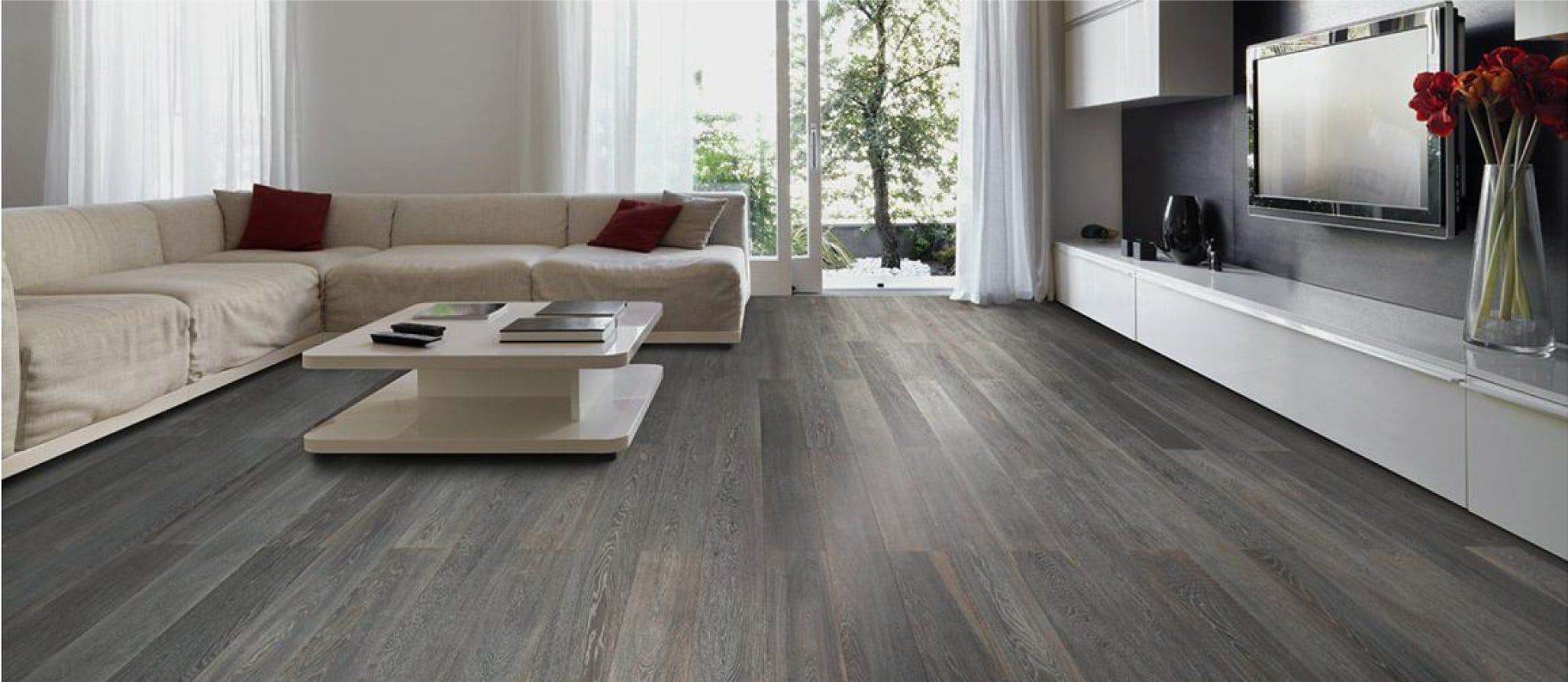
Choose SPC flooring if the floor will ever see water — kitchens, bathrooms, laundries, entrances — or if you want one floor that runs through the whole house. Laminate can still be a good budget choice for dry bedrooms and studies.
What is laminate flooring?
Laminate is a multi-layer floor built on a high-density fibreboard (HDF) core — compressed wood fibres bonded with resin. A printed photographic layer gives the wood look, and a clear melamine wear layer on top protects it. Planks click together and “float” over an underlay.
Good laminate is hard-wearing and scratch resistant. Its weakness is the wood-fibre core: if water gets into the joints or edges, the core can swell, and swollen laminate can’t be repaired — it has to be replaced.
What is SPC flooring?
SPC (stone plastic composite) flooring is a rigid-core vinyl plank. Instead of wood fibre, the core is made from natural limestone powder, PVC resin and stabilisers. On top sits a printed décor film, a clear wear layer (0.3 mm on the SPC flooring we supply) and a UV coating. Like laminate, it clicks together as a floating floor.
Because there is no wood in the core, SPC is 100% waterproof. It is also very dense, so it resists dents and stays dimensionally stable in heat and cold.
SPC vs laminate: head to head
| Factor | SPC flooring | Laminate flooring |
|---|---|---|
| Water | 100% waterproof — kitchens, bathrooms and laundries are fine | Core can swell if water gets in; best kept to dry rooms |
| Dents & impact | Dense stone core with superior indentation resistance | Dent resistant, but chips and swelling can occur at edges |
| Heat & stability | Stable from -75°C to 80°C; suitable for underfloor heating | Expands and contracts more with humidity |
| Fire | Fire-retardant; flames self-extinguish within seconds | Not rated fire-resistant in the manufacturer’s comparison |
| Thickness | About 6 mm — easier door clearances over existing tiles | Usually 7–12 mm |
| Installation | Glue-free click system over concrete, tiles or existing floors | Glue-free click system; needs a moisture barrier on concrete |
| Health | Our SPC range contains zero formaldehyde | HDF uses resin binders — check for a low-emission rating |
1. Water resistance
This is the biggest difference. A dropped glass of water on laminate isn’t a disaster if you wipe it up, but a leaking dishwasher, a wet bathroom floor or a flooded entrance can ruin it. SPC simply doesn’t absorb water, which is why it is the go-to choice for South African kitchens, bathrooms and open-plan living areas that flow onto patios.
2. Durability
Both floors are tough enough for busy family homes. Laminate’s melamine surface is very scratch resistant; SPC’s strength is its rigid core, which resists dents from dropped objects and furniture legs and won’t swell or delaminate. Use felt pads under furniture and soft castors on office chairs with either floor.
3. Heat and sunlight
South African homes see big temperature swings and lots of sun through large windows and sliding doors. The SPC we supply is rated to handle −75°C to 80°C without curling, with shrinkage of ≤ 0.002% and curling of ≤ 0.2 mm under EN 434 testing. That stability also makes it suitable for underfloor heating.
4. Installation
Both are DIY-friendly floating floors. SPC’s slim 6 mm profile is a real advantage when laying over existing ceramic tiles, because you are less likely to have to trim doors. With either floor, the subfloor must be clean, dry and level — for SPC, within 4.8 mm over a 3.3 m radius — and you need an expansion gap around the edges.
5. Look and feel
Modern versions of both are very realistic. SPC planks with deep-embossed grain and micro-bevelled edges look and feel like timber. Thicker laminate can feel slightly more solid underfoot; a good underlay closes that gap with SPC and improves acoustics.
Which floor for which room?
- Kitchen, scullery, laundry: SPC — spills and mopping are no problem.
- Bathroom and en-suite: SPC — fully waterproof planks.
- Open-plan living and entrance halls: SPC — one continuous floor that handles muddy shoes and wet umbrellas.
- Bedrooms and studies: Either. Laminate works well in dry rooms; SPC lets you use the same floor throughout.
- Rooms with underfloor heating: SPC.
Our verdict
Laminate is a capable floor for dry rooms, but SPC is the more versatile, worry-free choice for most South African homes. If you want one floor that can run from the bedroom through the kitchen to the bathroom, SPC is the clear winner.
Want to see the specifications? Visit our SPC flooring page or download the SPC spec sheet (PDF).